
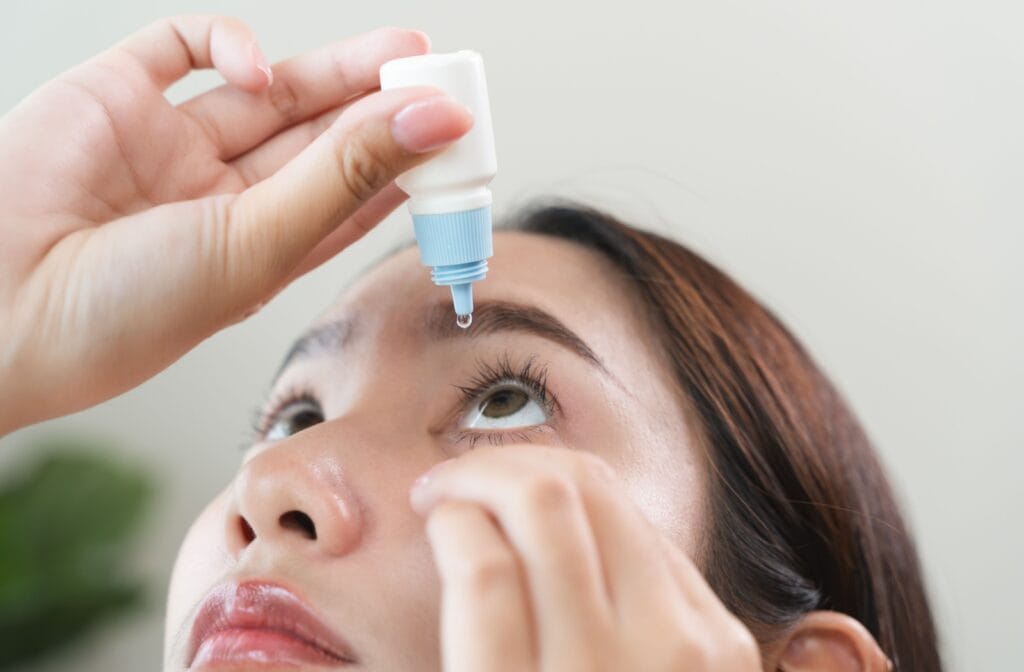
Why Artificial Tears Aren’t Enough for Chronic Dry Eye
Relying on eye drops for chronic dry eye? Discover why artificial tears only offer temporary relief and how targeting the root cause restores lasting comfort.
If you live with constant eye irritation, your day-to-day routine probably involves keeping a bottle of eye drops within arm’s reach. You apply a drop, feel a brief wave of soothing moisture, and get back to your task. But 20 minutes later, the burning, grittiness, or blurred vision comes rushing right back.
It is one of the most common frustrations reported by patients suffering from Chronic Dry Eye Disease: Why aren’t artificial tears fixing the problem?
While over-the-counter lubricating drops have their place in temporary symptom relief, relying on them as a long-term solution for chronic dry eye is like painting over water damage instead of fixing the leaky pipe. To get true, lasting comfort, it is essential to understand what artificial tears actually do—and why modern clinical treatments are necessary to fix the root cause.
The Band-Aid Effect: What Artificial Tears Actually Do
Over-the-counter eye drops are designed to mimic your natural tears. They supplement your eye’s surface moisture, providing immediate lubrication to soothe friction when you blink.
However, artificial tears are merely a topical, temporary buffer. They do not:
- Unclog blocked tear glands.
- Reduce chronic inflammation on the eyelid margins.
- Improve the quality or composition of the tears your body naturally produces.
- Prevent rapid tear evaporation.
Because the underlying pathology remains completely unaddressed, the drop washes away, evaporates, and leaves your eyes just as dry and vulnerable as before.
The Real Culprit: Evaporative Dry Eye and MGD
To understand why drops fall short, it helps to look at how your tear film is constructed. Your tears aren’t just water; they are a complex balance of water, mucus, and oils.
| THE 3-LAYER TEAR FILM ARCHITECTURE | |
| Layer | Function |
| Lipid (Oil) Layer | Outer seal; prevents tears from evaporating |
| Aqueous (Water) Layer | Middle layer; hydrates + nourishes the cornea |
| Mucin (Mucus) Layer | Inner layer; anchors tears evenly to the eye |
Up to 86% of chronic dry eye cases are driven by Meibomian Gland Dysfunction (MGD). The meibomian glands along your eyelid margins produce the critical outer lipid (oil) layer.
When these glands become inflamed or clogged with hardened, stagnant oils, your tears lack their protective oil seal. As a result, your natural aqueous tears—and any artificial tear drops you add—evaporate into the air almost instantly. Adding more watery eye drops to an oil-deficient eye will never solve the evaporation problem.
The Hidden Risk of Overusing Eye Drops
Relying too heavily on over-the-counter drops can sometimes backfire:
- Preservative Toxicity: Many traditional bottle drops contain preservatives (such as benzalkonium chloride or BAK) to prevent bacterial growth. When used multiple times a day, these preservatives can erode the delicate epithelial cells on the surface of your eye, paradoxically worsening inflammation and dryness.
- Rebound Redness: Drops advertised to “get the red out” contain vasoconstrictors that temporarily shrink blood vessels. Overusing them causes a rebound effect, making your eyes redder and more irritated once the drop wears off.
- Delayed Proper Care: By continually masking symptoms with drops, underlying gland dysfunction can progress unnoticed. Over time, chronically clogged meibomian glands can atrophy and die off permanently.
Target the Root Cause: Advanced Clinical Therapies
Rather than constantly washing the eye with temporary drops, modern optometric care focuses on restoring natural gland function and clearing chronic inflammation. Advanced clinical technologies offer non-invasive, structural solutions:
- Intense Pulsed Light (IPL) & Low-Level Light Therapy (LLLT): Light-based treatments target the abnormal, leaky blood vessels that feed inflammation around the eyes, while gently softening hardened oils. (Bonus: IPL and LLLT offer noticeable skin brightening around the treatment area.)
- Radiofrequency (RF): RF delivers controlled, soothing heat deep into the eyelid tissue to liquefy blocked secretions, allowing glands to express oil freely. (Bonus: Thermal energy stimulates collagen production, helping reduce fine lines and wrinkles.)
- Dynamic Muscle Stimulation (DMSt): DMSt uses targeted electrical stimulation to tone the facial muscles surrounding the eyes, promoting natural gland expression with every blink. (Bonus: Improved facial muscle tone delivers a subtle lifting effect around the eyes.)
Break the Cycle of Temporary Relief
If you find yourself reaching for eye drops multiple times a day, your body is telling you that the root cause of your dry eye remains unaddressed.
At ERC Optometry, we perform specialized diagnostic testing to evaluate your tear film quality and meibomian gland structure. By tailoring a treatment plan using advanced clinical technologies, we help you transition away from constant drop dependence toward natural, long-lasting ocular comfort.
Schedule a comprehensive dry eye evaluation with our clinical team today to discover what your eyes really need.
Quick Links To Our Service Pages
EYE DISEASE DIAGNOSIS & MANAGEMENT
LASER EYE SURGERY CO-MANAGEMENT
ERC Optometry is a boutique optometry clinic located in Brooklin, Ontario, proudly serving patients throughout Durham Region including Whitby, Oshawa, Ajax, Pickering, Port Perry, Uxbridge, and surrounding communities. We offer comprehensive eye exams, dry eye disease management and treatment, specialty contact lenses, myopia management, ocular disease management, and a curated boutique optical.